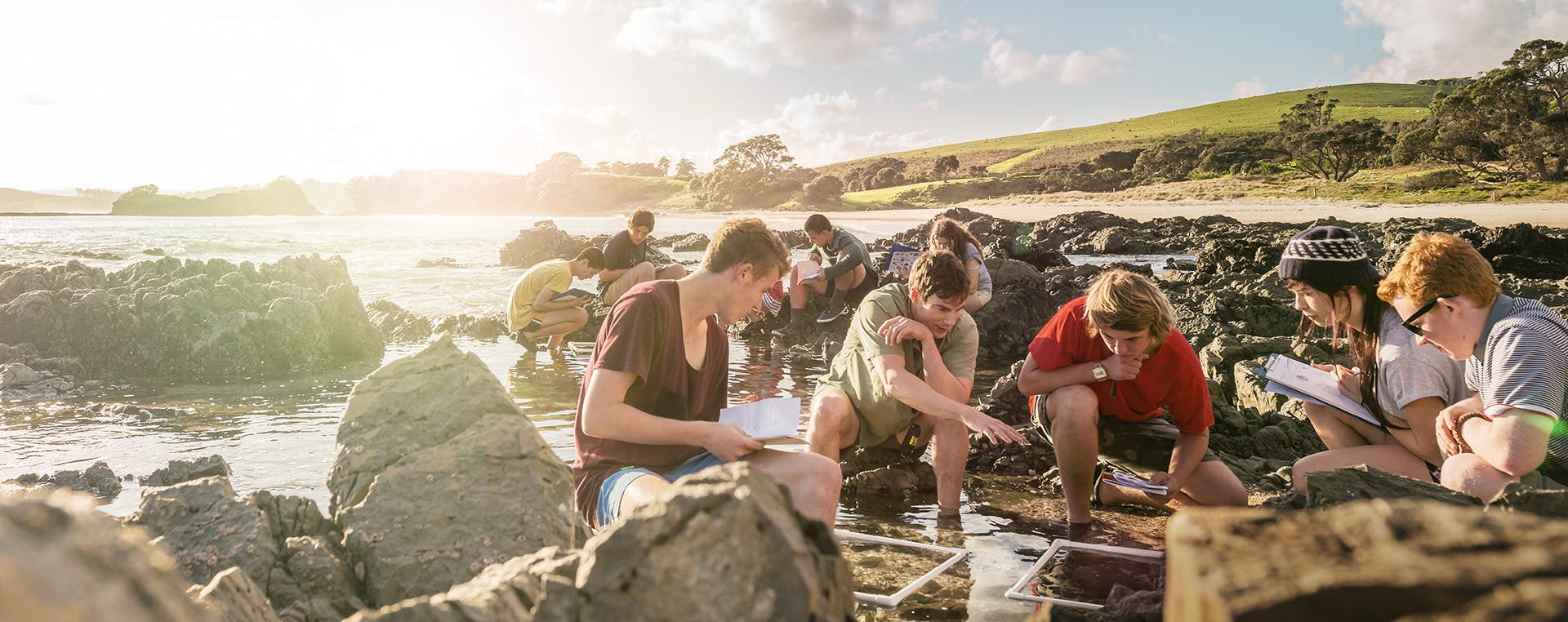
Understand New Zealand's education system
At every study level, New Zealand can give you a high-quality education that will enable you to achieve your goals.
Students in New Zealand are supported to solve problems, process information, work with others, create and innovate.
Find out about the New Zealand Qualifications Framework, and the different types of schools and education providers.
Study levels - New Zealand Qualifications Framework
The New Zealand Qualifications Framework (NZQF) is a system for acknowledging the level and quality of qualifications offered by New Zealand education providers.
All qualifications listed on the NZQF come with an assurance of quality that is recognised and trusted worldwide.
The New Zealand Qualifications Framework has 10 levels:
- Levels 1-4 cover the National Certificate of Educational Achievement (NCEA) - the main qualification in secondary schools, and basic vocational training.
- Levels 5-6 cover sub-degree vocational certificates and diplomas.
- Levels 7-10 cover degrees, graduate and postgraduate qualifications.
The NZQF study level indicates how advanced a qualification is. It is also relevant for post-study work visas(external link that opens in a new tab) for international students in New Zealand.
Learn more about the New Zealand Qualifications Framework(external link that opens in a new tab).

Higher education (ages 18+)
New Zealand has eight state-funded universities, 16 Institutes of Technology and Polytechnics (ITPs), and about 550 Private Training Establishments (PTEs), which include English language schools.
Higher education providers
Universities
All of New Zealand’s universities rank among the top 2% in the world, offering world‑class education focused on research and academic excellence. Study from degree level to PhD.

Institutes of Technology and Polytechnics
Gain practical, career-focused skills through hands-on learning. Programmes range from certificates and diplomas to applied degrees, with strong industry connections.

Private Training Establishments (PTEs)
Study specialised programmes designed for specific industries. Courses range from foundation to diploma level with practical training and smaller class settings.
Education here is really good. Students are encouraged to take initiative, to think on their own, and to come up with their own reasoning.
Shin Yee Teh, from Malaysia, Bachelor of Commerce student at the University of Auckland

Schools (ages 5-18)
Our school system allows learners to design an education that best meets their goals and personality.
You can choose the type of school and its location, as well as the ideal study programme.
Types of schools
Schools in New Zealand are either state schools (where 85% of children go), state-integrated schools (which may be faith-based or use specialist teaching methods), or private schools.

Secondary schools
(ages 13-18, years 9-13)
Students at secondary schools - also known as high schools or colleges - work towards the National Certificate of Educational Achievement (NCEA). Secondary schools also offer some vocational subjects, such as tourism and computing. Some schools also offer Cambridge International Examinations and International Baccalaureate (IB) programmes. How NCEA works(external link that opens in a new tab)

Intermediate schools
(ages 11-12, years 7-8)
Intermediate schools are a bridge between primary school and secondary school. Primary education starts at Year 1 and continues through to Year 8. Years 7 and 8 are offered either at a primary school or at a separate intermediate school.

Primary schools
(ages 5-10, years 1 - 6)
Primary school students study subjects guided by the New Zealand National Curriculum: English, the arts, health and physical education, languages, mathematics and statistics, science, social sciences and technology. Students’ abilities in reading, writing and maths are regularly assessed against expectations for their age level, as set out by New Zealand’s National Standards(external link that opens in a new tab).
Quality and standards
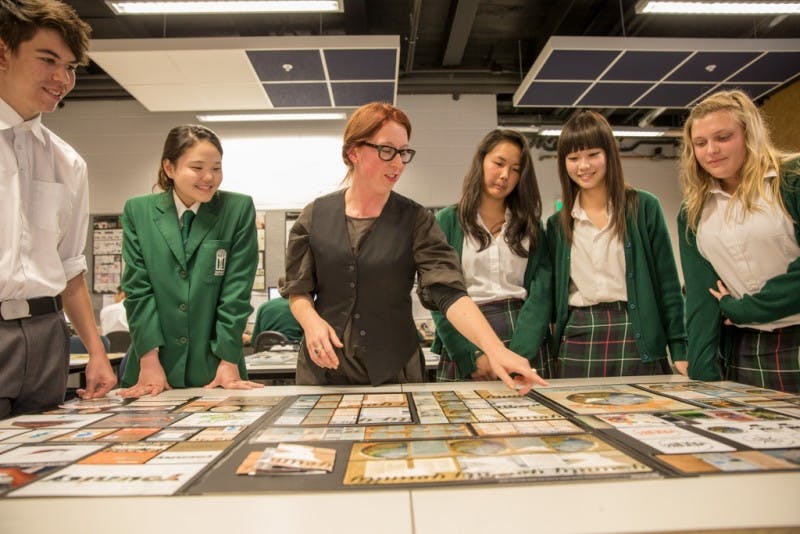
The New Zealand government has strong quality assurance systems to ensure high-quality education at all levels of the education system, both public and private.
Deciding what to study isn't always an easy decision. Would you like some help?
Talk to an Education Agent for assistance tailored to you. They can help you learn about your options and give advice to help you choose where to study.
Here's a tip: use the 'area of study' filter on our course search tool to get some inspiration.