School system and qualifications

The New Zealand school system gives students the skills and qualifications to succeed anywhere in the world.
The flexible, supportive learning environment helps build the confidence and independence needed to excel in further study.
Types of schools
Schools in New Zealand are either state schools (where 85% of children go), state-integrated schools (which may be faith-based or use specialist teaching methods), or private schools.
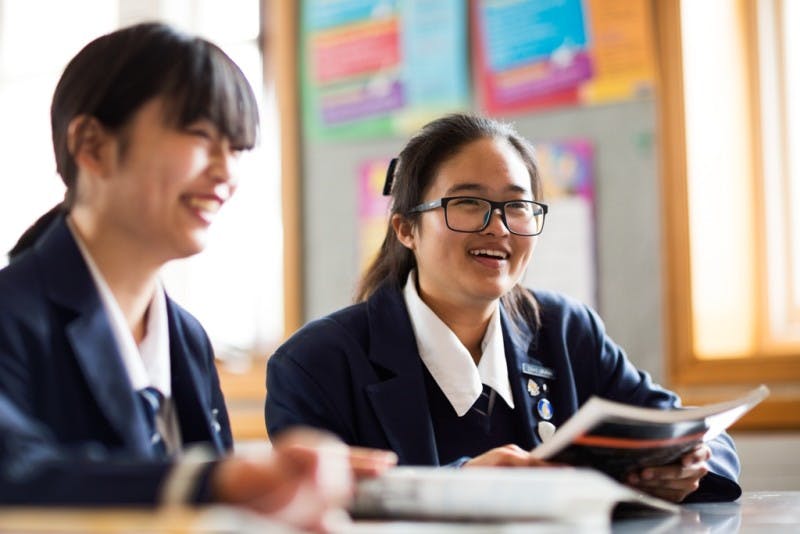
Secondary schools
(ages 13-18, years 9-13)
Students at secondary schools - also known as high schools or colleges - work towards the National Certificate of Educational Achievement (NCEA). Secondary schools also offer some vocational subjects, such as tourism and computing. Some schools also offer Cambridge International Examinations and International Baccalaureate (IB) programmes. How NCEA works(external link that opens in a new tab)
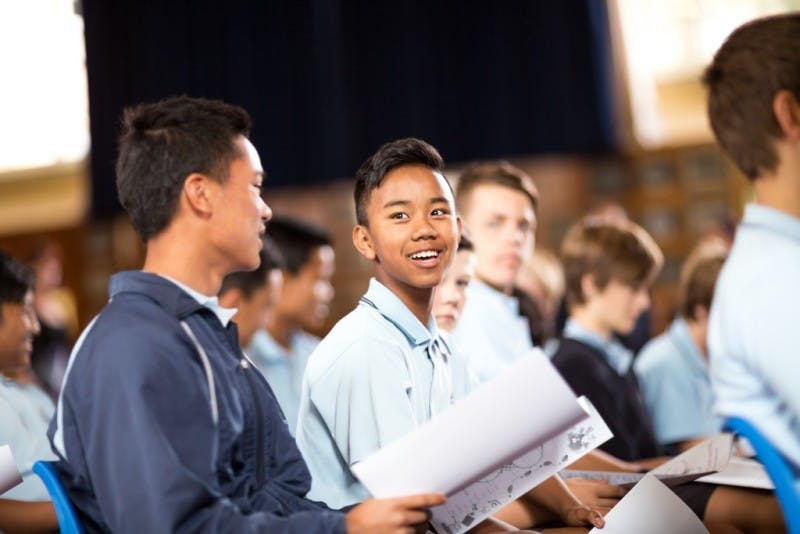
Intermediate schools
(ages 11-12, years 7-8)
Intermediate schools are a bridge between primary school and secondary school. Primary education starts at Year 1 and continues through to Year 8. Years 7 and 8 are offered either at a primary school or at a separate intermediate school.

Primary schools
(ages 5-10, years 1 - 6)
Primary school students study subjects guided by the New Zealand National Curriculum: English, the arts, health and physical education, languages, mathematics and statistics, science, social sciences and technology. Students’ abilities in reading, writing and maths are regularly assessed against expectations for their age level, as set out by New Zealand’s National Standards(external link that opens in a new tab).
New Zealand has a good education foundation together with encouraging the student to think and be proactive, which will make them a better adult in the future.
Brumi Bhatara Wongsoontorn from Thailand, father of two students at secondary school in New Zealand.
Secondary school qualifications
Secondary schools offer a great range of qualifications that are accepted by universities in New Zealand and around the world.
National Certificate of Educational Achievement (NCEA)
New Zealand's main national secondary school qualification for years 11-13. Student achievement is assessed through a mixture of project work and exams. Assessments are either internal (set by the school) or external (set by the New Zealand Qualifications Authority).
The Cambridge Examinations
Approximately 40 New Zealand secondary schools offer this qualification. It can be attained at 3 levels in either year 11, 12 or 13, and uses a range of assessment methods with the emphasis on external exams.
International Baccalaureate (IB)
Developed in Geneva, IB is designed to provide an internationally accepted qualification for entry to higher education. There are approximately 25 World Schools in New Zealand offering one or more of the three IB programmes.
Do you want some help to make the right decision?
Talk to an Education Agent for assistance tailored to you. They can help you learn about your options and give advice to help you choose the right school.
Read our information for parents page to help you decide if New Zealand is the right choice for your child. For school-specific information, contact the school directly - they'll have answers to all your questions.